
Students and parents should not rush into choosing an overseas medical university. Tuition prices are one thing, but they’re only part of the story. Recognition, curriculum, clinical exposure, language of instruction, licensing requirements and living costs can have a far greater impact on a student’s long-term medical career.
East European University (EEU) in Tbilisi has emerged as a popular choice for Indian students looking for MBBS in Georgia as an international university offering medical education in English.
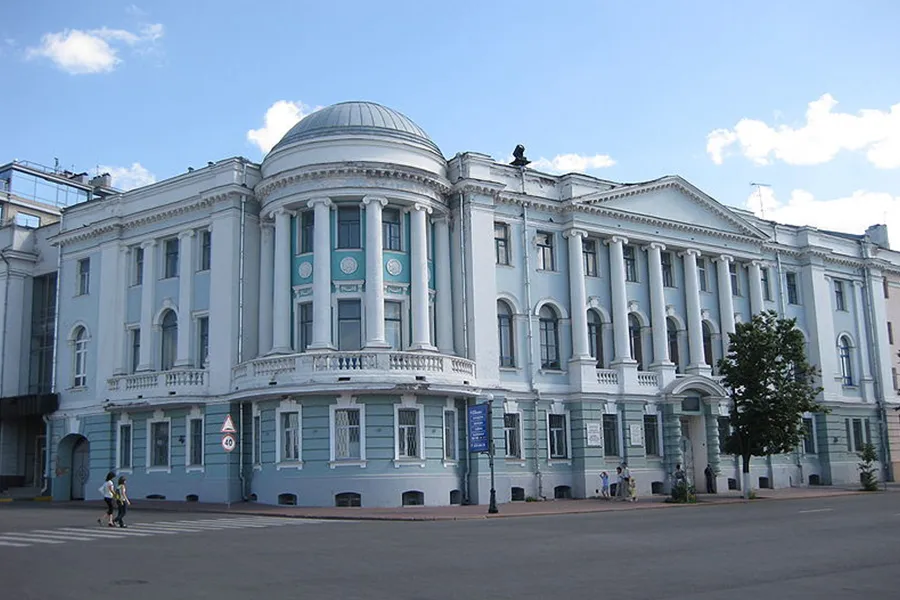
Being based in Tbilisi, the university offers students access to a capital city with public transport, international communities and a growing population of overseas students. The student-tour material highlights modern classrooms, library facilities, laboratories, student activities, security arrangements and clinical training as parts of the student experience.
But here’s the important bit: a university can look attractive on paper and not be the right choice for every Indian medical aspirant.
So let’s talk about East European University (EEU) Tbilisi MBBS for Indian Students before taking any admission deposit including eligibility, NEET requirements, admission, fees, hostel life and the licensing pathway after graduation.
Georgia has become one of the destinations for international students looking for medical education outside of India. Students may find it easier to get into a Georgian medical university and to live in general, compared to some Western destinations.
Studying medicine in Georgia may offer the following for Indian applicants:
English-language medical education
An international student atmosphere
Exposure in a European health care setting
Clinical learning opportunities
A relatively easy way to get into
An experience of multiculturalism outside India
But don’t confuse “easy admission” with “easy medical education.” Medicine is hard work wherever you study.
The critical question is whether the university and program concerned meet the requirements relevant to Indian students and their future licensing plans.
East European University (EEU) is a private university located in Tbilisi, Georgia. The capital, Tbilisi, has public transport, shops, restaurants and all the normal city facilities a student would need.
According to the student-tour material provided for this article, EEU’s campus environment is modern and organised with classrooms equipped with teaching technology, library facilities and laboratories for practical learning. It also includes student clubs, cultural activities and sports related opportunities.
Medical students need more than infrastructure. Clinical exposure is particularly important.
A similar English-medium medical school and hospital rotations are mentioned, with doctors teaching students during their clinical training. These observations can give prospective applicants an idea of the reported student experience but students should check independently the current curriculum, affiliated hospitals and clinical-rotation arrangements before admission.
For Indian students, the decision should begin with regulatory compliance and not advertisements.
Students before applying for MBBS in East European University (EEU) in Tbilisi must check the current NMC (National Medical Commission) requirements for foreign medical graduates.
This is especially important as regulations are subject to change.
Students must make sure that the particular medical program they are enrolling into meets the requirements for Indian students, such as issues like:
Course length
Language of instruction
Clinical education
*Internship arrangements
Subject and curriculum
Where you were trained
Eligibility for the appropriate Indian licensing route
Don’t take the word “NMC approved” for granted. Ask for documentary evidence and cross check information with the official regulatory sources.
Indian students usually complete Class 12 or equivalent with the necessary science subjects, specifically Physics, Chemistry and Biology/BioTechnology along with English.
The specific academic requirements must be verified with both:
and the existing admission requirements of EEU.
NMC rules applicable to Indian students in the year of admission.
Students should also ensure their school-leaving qualification is accepted for the Georgian admission process.
NEET qualification is an important requirement for Indian students who wish to enrolll themselves in medical education abroad and later get themselves registered as medical practitioners in India as per the prevailing Indian regulations.
There is a common misconception that if you are a qualified NEET, then any foreign medical university will automatically be suitable for you.
No it doesn't.
NEET qualification and eligibility for admission in foreign university are two different checks. The student must satisfy the relevant NEET requirements and must independently verify that the foreign medical program they choose complies with the foreign medical graduate rules of India.
Before applying for the 2026 intake, please check the latest information published by the NMC and the National Testing Agency (NTA).
The admission procedure may vary depending on the intake and the applicant’s circumstances, but generally, Indian students can expect a process similar to the one below.
Check your Class 12 subjects, marks, NEET status, passport validity and other admission requirements.
Common documents requested may include:
Passports;
*Class 10 Certificate
Certificate and Marksheet of 12th Standard
NEET scorecard or proof of qualification, if any
Passport size photographs
*Medical records if applicable
Application Form
Other documents requested by the university.
Arrange scanned copies. It sounds trivial but can save a mountain of headaches later.
Follow the proper official channel to complete the university application.
Students should ensure that the name, date of birth and passport details match on all documents.
Eligible candidates may be given admission or offer letter after assessment.
Read the terms before you make payments.
Students can proceed with the relevant Georgian visa/entry procedures once the necessary admission documentation is ready.
Visa rules may change and applicants should not depend on social media posts or informal advice but on current official information from the Georgian government.
Students upon arrival in Tbilisi carry out the enrolment and registration formalities of the university.
The student interview also mentions help with documentation and residence-related processes. Applicants should, however, check closely to see what support is included in their particular offer of admission.
One of the most searched questions is What is the East European University (EEU) MBBS fees 2026?
The answer deserves a bit of caution.
Fees are dependent on intake, university policy, exchange rates and the conditions of an individual admission package. So students should not assume an old website, YouTube video, or consultancy brochure is a guarantyd 2026 fee schedule.
Consider more than tuition when calculating East European University (EEU) fees.
Your actual budget could be:
Tuition fee
*University registration charges
Hostel/Apartment Rent
Food.
Medical insurance
costs of residence
Airline tickets
Local transport
Study material
Personal expenses
Preparing for licensing exams after graduation
Put simply, the “total MBBS cost” is greater than the headline tuition figure.
For East European University (EEU) MBBS fees 2026 get the written fee structure from university or authorised admission channel before making any payment.
Moving to another country from India is a huge adjustment.
EEU’s campus-tour materials show that the student environment consists of security provisions, library facilities, student activities and cultural interaction opportunities.
The material also talks about a student friendly atmosphere in Tbilisi, with connectivity to public transport.
However students should check the current availability of accommodation and not assume that every applicant automatically gets university accommodation.
Ask these questions before you book:
Is the accommodation university managed or privately run?
How far away from campus?
Are meals provided?
Is Wi-Fi included?
What security provisions exist?
How many students to a room?
What is the cancellation/refund policy?
Are utility charges included?
A quick video tour is helpful, but a written agreement is even better.
Learning thru the medium of English may be an important consideration for students in India.
According to the student interview that accompanies the source material, the medical program is taught in English, except for language subjects. It also describes the clinical teaching, including doctors and hospital rotations.
Clinical training should receive special attention.
Don't just ask, "Does the university offer hospital exposure?"
Ask instead:
Where are clinical rotations located, hours, departments, supervision of training?
That information is much more helpful.
Students should seek exposure to internal medicine, surgery, paediatrics, obstetrics and gynaecology, emergency medicine and other required clinical disciplines.
This is where students need to keep their eyes on the ball.
Studying MBBS abroad does not automatically entitle you to practise in India.
Indian graduates returning from foreign medical universities will be required to meet the medical registration requirements prevailing at the time of their application for registration.
The Foreign Medical Graduate Examination (FMGE) has historically remained a major licensing hurdle for foreign medical graduates. The regulatory framework in India is evolving including the transition toward National Exit Test (NExT).
Therefore, students who want to take admission in a foreign medical program in 2026 should not take a decision based only on an old “FMGE pass percentage” chart.
Searches for FMGE pass percentage of East European University (EEU) in Tbilisi can give different figures on the internet.
Take care.
Unless supported by reliable, current and verifiable data, a pass-rate figure should not be taken as an official university statistic.
Students should, instead, ask:
Recent graduate licence results
Number of graduates who participated in
Number of passes
Year of testing
if the data represents the entire graduating cohort
Whether the numbers are independently verifiable.
Now that’s a much smarter way to judge licensing performance.
EEU Indian students should not wait until graduation to think about the licensing examination.
Build up your preparation bit by bit.
Revise key concepts alongside university coursework.
Focus on high-yield topics and clinical correlations.
Use Indian Exam-Oriented Material
Foreign medical curricula and Indian licensing examinations are not the same. Supplement your university teachings with reliable exam-oriented material.
MCQs can reveal gaps in knowledge much faster than passive reading.
Maintain a simple error notebook or digital record of common mistakes.
For licensing exams you need more than to memorise isolated facts. Diagnosis, investigations, treatment and clinical reasoning are important to understand.
Another common search is **Tbilisi world ranking of East European University (EEU).
Ranking websites can be useful, but they should not be the deciding factor for an MBBS applicant.
A checklist that is more meaningful reads:
Is the university legally recognised in Georgia?
Is the medical program approved/accredited as applicable at this time?
Does the program fulfilll the needs of Indian graduates?
Where is the clinical training located?
What's the course actually like?
What are the present fees?
Which licensing outcomes are independently verifiable?
Also, do not be confused by the similar sounding names of East European University in Tbilisi, Georgia with the institutions in Russia or other countries.
The search term “East European University Tbilisi Russia” can thus be misleading. EEU is located in Tbilisi, Georgia, not in Russia.
Official information should be obtained from the university’s website and concerned Indian and Georgian regulatory bodies and not from any third party ranking pages.
Students also sometimes look for East European University (EEU) in Tbilisi MBBS placement.
Medicine is not like most traditional undergraduate degrees.
Usually a medical degree doesn't mean that you're guarantyd a job right after you graduate. Licensing, internship requirements, postgraduate training and the rules of the country you hope to practise in will dictate your career.
After graduation, possible paths include:
Medical license in India
Postgraduate training of doctors
*Licensing routes in other countries
Clinical practice following local requirements
Studium
Careers in health care academia
For an Indian student, the most important thing is to plan the licensing pathway before you choose the university, not after you have done six years of study.
Before you make your final decision, use this checklist:
1. Look at the university.
Check for current official recognition and accreditation status.
**2. Look at the program.
Don’t think that recognition as a university will automatically solve all your questions about the medical program.
**3. Check NMC requirements.
Consult the rules for your year of admission.
4. Check the full cost.
Calculate tuition, accommodation, food, travel and other expenses.
**5. Enquire about clinical training.
Write it down.
**6. Don’t chase rankings for rankings sake.
More important are clinical exposure, and eligibility for licensing.
7. Question guarantyd outcomes.
No legitimate adviser can promise you a result in a licensing exam or a job in medicine later on.
**8. Document it.
Keep admission letters, fee receipts, academic records and clinical training records.
**9. ** Start your licensing prep early.
Your last year self will thank you.
However it can be considered by Indian students but the suitability depends on the student's academic profile, budget, career plans and adherence to medical regulations applicable in India.
Indian students have to follow the rules of NEET for Indian nationals who want to pursue medical education abroad. Check the latest NTA and NMC rules for the respective admission year.
The student interview provided suggests English is the language of instruction for medicine with a separate language component. Students should verify the current curriculum with EEU prior to enrolment.
Tuition and other fees may change. Please check the university or an authorised admission channel for the exact fee for 2026. Don’t just look at tuition, figure out the full cost.
Accommodation options to be confirmed for the specific intake. Before making payment, students should receive information on availability, location, room sharing, meals, facilities and pricing.
No responsible university or consultant can guarantee the outcome of a person’s licensing exam. Students are expected to independently prepare for and sit the applicable Indian licensing examination.
Is East European University located in Russia?
No. The EEU discussed in this article is based in Tbilisi, Georgia. Similar search terms may lead to confusion with universities in other countries.
Graduates are required to satisfy the Indian medical registration and licensing requirements in effect at the time they seek to practise. Foreign medical degree, per se, does not entitle for registration in India.
MBBS in East European University (EEU) in Tbilisi is one of the options for Indian students who want to take up international medical education in Georgia. Its English-language environment, campus facilities, student activities and clinical-learning opportunities are notable for closer examination.
But don’t let attractive fee packages, glossy photographs or a marketing pitch make the decision for you.
For East European University (EEU) in Tbilisi MBBS for Indian Students, it’s wise to verify all the aspects that will affect your future – eligibility, NEET requirements, medical-program recognition, clinical training, overall expenses, accommodation and the licensing pathway in India.
Most importantly, remember that the cheapest med school is not always the most economical. A program that gives you relevant training, strong academic preparation, and matches your long-term licensing plans can be far more valuable.
Students and parents can start their research on the official website of East European University:
https://eeu.edu.ge/en/
See the National Medical Commission for Indian regulatory information:
https://www.nmc.org.in/
For NEET related information use the National Testing Agency:
https://exams.nta.ac.in/NEET/
If you are going to work with an education consultancy, choose one that gives you clear information about their fees, gives you written documentation and current regulatory information, rather than making improbable promises. A seasoned international-education adviser can assist applicants with comparisons between universities, documentation and planning the application process, but final regulatory checks should always be from official sources.
Basically, do your homework, double-check, and choose your medical school with your licensing destination in mind. That’s the safest way to make your dream of MBBS abroad a realistic medical career.