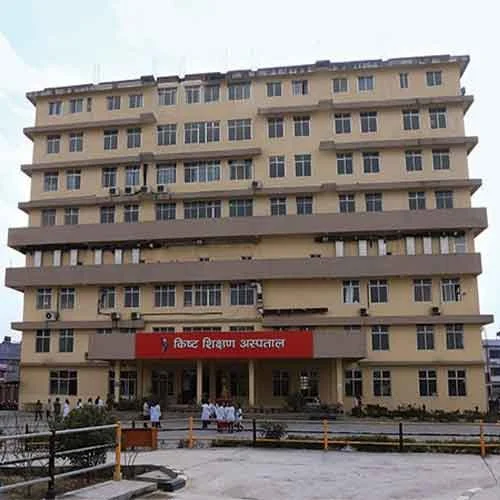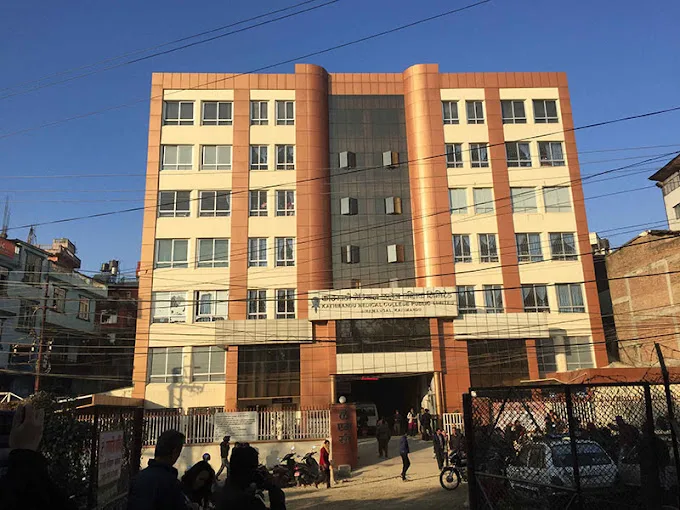

MBBS Abroad has become the best option for thousands of Indian students due to the dearth of government medical seats and high costs of private medical education in India. Countries such as Russia, Nepal, Kazakhstan, Kyrgyzstan, Uzbekistan and other Central Asian countries have become a hot spot for economical, internationally recognized medical programs.
But to get a MBBS from abroad is just half the journey.
The real problem arises when the graduates come back to India and attempt to get themselves registered with the National Medical Commission (NMC) to practice medicine legally. The replacement of the Foreign Medical Graduate Examination (FMGE) framework and the eventual introduction of the National Exit Test (NeXT) has complicated the pathway.
Many graduates focus on getting their degree, not on the important license requirements that await them back home. This leads to late registration, failed screening exams, documentation problems, and years of professional ambiguity.
This handbook is a tactical road map for foreign medical graduates (FMGs) who are looking for a smooth transition from overseas medical education to licensed medical practice in India.
The demand for medical education in India is more than the government seats. Lakhs of NEET qualified students every year do not get cheap MBBS admissions.
Consequently, MBBS Abroad has emerged as a viable alternative due to:
The main beneficiaries of this tendency are countries such as Russia, Nepal, Kazakhstan, Kyrgyzstan and Uzbekistan.
Affordability can’t be the only thing to think about.
Before choosing a university students should check whether their education is compatible to Indian licensing standards.
In India, the regulator for medical education and licensing is the National Medical Commission (NMC).
All students finishing a MBBS from Abroad need to meet certain standards before they get registered to practice medicine.
Earlier, foreign graduates were required to clear the FMGE Test conducted by the National Board of Examinations (NBE).
But India is moving towards the NeXT Test which is aimed to standardize the assessment of medical competency of both Indian and foreign medical graduates.
This change means students need to focus not only on academic knowledge but also on clinical competency and practical abilities.
Foreign Medical Graduate Examination (FMGE) is the screening examination for abroad medical graduates who wish to register in India.
The FMGE has been important yet the pass rates have been traditionally low.
In several sessions, completion rates have been between 10% and 25%.
This reveals a huge gap between global medical curriculum and India’s medical education norms.
The major misperception amongst students studying MBBS Abroad is that FMGE checks primarily theoretical recollection.
What successful applicants actually look like:
Students who depend on rote learning find it difficult to pass.
Students who mix clinical exposure with academic instruction do far better on a regular basis.
The NeXT Exam is one of the most important innovations in Indian medical education.
The NeXT is designed to test both knowledge and clinical competency, unlike the FMGE which was mainly a screening technique.
The NeXT framework will probably have more emphasis on:
Students have to go through patient cases, not just regurgitate textbook facts.
Candidates will have to show real-world medical expertise.
Subjects will not be compartmentalized.
Medicine, surgery, pathology, pharmacology and diagnostics will be assessed combined.
For students opting for MBBS from Abroad, that implies preparation needs to begin years before graduation.
Foreign medical education has been subjected to tough norms by the National Medical Commission.
Students should take admission only after making sure that the overseas university meets the NMC standards.
The main prerequisites are:
The prescribed duration standards are subject to the medical program.
Mandatory components of the clinical internship must be performed.
Students should have enough hands-on patient involvement.
Students must be able to communicate successfully with patients and professors.
The degree must entitle graduates to practise medicine in the country of its award.
Non-compliance with these conditions may endanger eligibility for registration in India.
Yes, provided the graduate fulfills NMC regulations and clears the applicable licensing examination requirements.
FMGE is the screening examination for foreign medical graduates seeking registration in India.
NeXT is the proposed national licensing examination designed to assess medical knowledge and clinical competency.
Russia, Nepal, Kazakhstan, Kyrgyzstan, Uzbekistan, and other Central Asian countries are among the most popular destinations.
No. Graduates must complete all regulatory requirements, licensing examinations, and registration formalities.
Common reasons include inadequate clinical exposure, poor preparation strategy, and over-reliance on rote memorization.
MBBS in Russia remains one of the most popular choices due to affordability and established medical universities.
Nepal offers cultural familiarity, similar disease profiles, and healthcare systems that are easier for Indian students to adapt to.
Typically, degree certificates, transcripts, internship records, passport documents, and university recognition certificates are required.
Preparation should ideally begin during the first year of medical education and continue throughout the course.
Your medical degree may be global but your medical license must comply with the Indian regulatory requirements. This fact is known to the most successful foreign medical graduates from day one.
Matching your education to NMC requirements, strategic preparation for FMGE Test and NeXT Test, clinical competence and impeccable documentation can translate your foreign medical education into a successful medical career in India.
The best students aren't necessarily the brightest. They are the ones who have their exit strategy planned before they even start their journey abroad.
In a time of changing regulations and growing competency requirements, strategic preparation is no longer a choice; it is the basis of professional success.